In all this discussion of ‘should’ I am sure there are those who are concerned about
what a should-free world look like. How would removing the word ‘should’ from our vocabulary not result in an open ticket to lawlessness?
Well, it certainly could. And if the idea of should-free living gets into the popular culture, it would most likely be taken up as the banner of those seeking excuses to break laws. So perhaps it’s a little reckless to put this idea out there. But like any idea we explore, we are each responsible for how we receive and interpret it.
Anyone who wants to break the law isn’t waiting around for permission from me or anyone else to do so! My students and people who read this blog are more inclined to be so law-abiding that they are creating extra internalized laws, and err on the side of self-imprisonment as a way to be sure they are acceptable. That’s certainly my inclination. As to those who lean the other way, if they have gotten this far in reading this blog, I trust it is with the intention to end the suffering they have seen caused by reckless disregard of the rights and feelings of others. They deeply understand cause and effect and don’t need the word ‘should’ anymore than anyone else. But it still may be a habit, even if it’s only to rail against the word!
So what would a should-free world look like? Such a world could only be sustained if everyone in it were awake, aware, full of loving-kindness and compassion.
But the world we wake up to every morning is not like this, is it? Well, actually it often is until we access the news of the day -- that amalgam of all the things people shouldn’t have done but did. In this imperfect world of people who feel no sense of deep connection to the all that is, we see the damage they, and sometimes we, cause. And it either breaks or hardens our hearts, and probably makes us feel vulnerable, defensive and wary.
We say the world should be a peaceful place, safe for all beings to live free from harm. Right? When we get that ‘should’ in there, we can notice an emotional punch of anger, longing or something else. We use that word should like a paddle to beat ourselves or others with, thinking this spanking will move ourselves or others toward a goal. But does it? How much more effective to use the 'should' we discover in our thinking or speech as a question mark drawing us to explore what it is we really mean, as per previous posts.
Dreaming up a utopian world is a sure way to miss out on this moment. In this moment -- the only moment we have -- we have the capacity to see the beauty of what is. If we can see only the disparity between how the world should be and how the world is, we condemn ourselves to suffering. The utopia filter is particularly blinding. Nothing is ever good enough. Or if it briefly does live up to our expectations, it is flawed because of its inability to last.
Whether we are dreaming up this utopia for ourselves or for others, we are still reinforcing the sense of dissatisfaction with what is, which in turn creates a world of unsatisfactoriness. If we get trapped in hope or despair about the future of the world, we lose the energy to lighten and reveal the truth of this moment. This lightened moment radiates out into the lives of many for all the moments to come. Both despair and hope deaden this moment and create weight on the ones to come, creating just that much more despair.
You might be surprised to see ‘hope’ in there. Yes, hope is seductive because it seems positive. But in fact it is always finding fault in this moment and projecting a brighter future. People say ‘If I didn’t have hope I wouldn’t be able to tolerate this situation.’ Well, the hope keeps us from being able to be fully present in this situation, noticing what arises and questioning our assumptions. Without that ability to see the present clearly, we are doomed to be blind to the causes and conditions of the situation. Instead we hope, thus we are withholding our full attention to what is until things get better. Then maybe we’ll be present and able to let go of relying on hope to pull us through. Understanding the nature of impermanence, we intrinsically know that 'this too shall pass' and we may take comfort in that fact, but that's different from directing our attention into the future banking on the hope of change.
Does this sound harsh? It’s not. We wish well for all beings, including ourselves and the people we are closest to. This is an important part of our practice, this sending metta or loving-kindness. But sending metta is not about imagining some specific future situation. It is aligning ourselves with the universal energy of infinite loving-kindness that is always present if we are present to notice it, and radiating it for the benefit of all.
When we get entangled with ‘should’ then the infinite energy of loving-kindness is shorted out. There is a back story with every ‘should’ we say. There’s a rebuttal to every ‘should’ we have. And our ambivalence is a tight thought/emotion pattern that plucks our awareness right out of the present moment. When we are not in the present moment fully, then our energy is disruptive. We short-circuit the loving-kindness that is our natural open expression.
When we bring our ‘should’ mentality into a situation, we initiate a frenzy of mental activity that races to judgment and tries very hard to distance us from the perpetrator of the wrongdoing, even if it is ourselves.
If we can take the time to notice and explore the shoulds and alternate words that crop up often in the way we talk, we can co-create a should-free world in any moment.
Tuesday, June 19, 2012

Sunday, June 10, 2012
Why do we procrastinate?
Noticing the word 'should' when it shows up in our thoughts gives us creative opportunity for exploration. We hear the ‘should’ when we say it and we can pause to play with it. Yes, play!
So, for example, we notice ourselves saying, “I should do (fill in the blank). Ah, ‘should!’” Here we can recognize an opportunity to discover some inner resistance or ambivalence around the thing we feel we ‘should’ do. Noticing the should gives us the chance to sense into that ambivalence and resistance to discover what other thoughts or emotions are present. We might say, ‘Hmm, for some reason I have ambivalence or resistance to doing this thing since I am using the word ‘should’ around it rather than just saying I’m going to do it. What is my ambivalence? What is my resistance?’ This can be a very rich inner dialog, as long as we remember to set the intention to be respectful, curious and compassionate in the process.
Using the ‘shoulds’ we discover as opportunities for self-exploration is more useful and creative than creating another self-scolding ‘should’ level by thinking we shouldn’t use the word ‘should!’
One friend said that she didn’t use the word ‘should’ much. But then, as the conversation continued, she noticed that she was using ‘need to’ and ‘have to’ and other substitute words for should. And then a few shoulds cropped up as well. So we laughed about that! We all use this word or some variation all the time. So it’s not about eradicating the word from our vocabulary, but about noticing it, and then using that noticing to creatively question where we are feeling resistance.
Resistance and ambivalence leads to procrastination. You can look at the areas where you most often procrastinate and find a hornet’s nest of shoulds! Is it a pile of papers on your desk? A phone call you’ve been meaning to make? A party or trip you’ve been meaning to plan? A pile of clutter you've been meaning to sort? Whatever it is, it's clearly a 'should' that makes you shudder. Why?
EXERCISE
After meditation, give yourself at least an extra ten minutes to perform this exercise if it is of interest to you. Have a journal or piece of paper handy to jot down anything that comes up that you might want to review later.
Pick an area of procrastination that feels pertinent right now, something you’ve been meaning to do but haven’t.
Just think about it in your usual way. You will have a recurring pattern of words that you use around this thing that you've been meaning to do. Simply allow it to play out.
Now notice the language you use as you think about it, just being curious and kind. (It's like trying to get a little closer to observe some very skittish little animals that will run at the first provocation. So notice but don't engage. Let them just exhibit their natural behavior.)
When you come upon a ‘should’ or similar word, pause to notice how it feels in the body.
Does anything tighten up, get closed off, get shut down?
How does this affect the inner conversation?
Does the conversation shifts energy on the pivot point of these should words?
If so, does it wind down so you just don’t want to think about it anymore? Or does it heat up in the form of anger, frustration, shame or blame?
Notice the emotions that arise.
This is an exploration. We are not trying to control it. There is no ideal outcome. There is just this noticing the habituated patterns in our thinking.
Notice hopefulness or expectation that this exercise will ‘solve the problem.’
Remind yourself to simply be present with the experience of noticing this pattern of inner conversation in order to learn more about it. This is not about trying to change it. When we are too eager to see results, our expectations sabotage the process.
Remind yourself to bring as much compassionate curiosity as possible to this exploration.
When you find yourself judging, be compassionate about that. This is also part of the pattern that you can explore.
We all have habituated inner conversations like this. I have several of them. I lurch a few steps forward on the project, then some chain reaction of inner events causes me to set it aside, sometimes for years. But even when I’ve set it aside, the 'should' is still there, running around in my head. When I pause and see what’s happening, I can choose to explore it, if it’s an appropriate time, or I can simply be present, noticing the thread of thought as it passes through and return to whatever activity I am doing with my whole attention.
One reason we are reluctant to explore why we procrastinate is the physical discomfort we feel when the subject comes up. Noticing the physical sensations is very helpful. Notice the sensations. Notice the desire to run away from these sensations. Set the intention to simply be present with them.
These sensations, when noticed, provide a lot of insight. The tension that arises in our body is the way we hold the past and the future. In meditation, in order to maintain a sense of being fully present, we can breathe into the area to release the tension. This also works well when we are feeling stressed in life. BUT when we are doing an inner exploration, these physical sensations of tension are valuable messengers, because they do hold information in the form of memories, hopes and fears.
We may be afraid to open this 'can of worms' or 'Pandora's Box' of memories and imaginings. In a post-meditative state we can be present with the fear as well as the images that arise. We are less threatened by them because we have developed the ability to observe threads of thoughts and emotions traveling through our open field of spacious awareness. There may be images of something painful, but if they arise they are here to answer a question only, not to cause more pain. After meditation we are better able to look at them with this fresh viewpoint rather than avert our attention in fear as we might usually do.
How is this image answering the question posed? How does it tie in to the excuses we make about why we procrastinate in this area? Staying curious, kind, non-judgmental if at all possible, we have access to the answers within us. Through meditation, we are able to see more clearly the tight fear-bound patterns of our thoughts and emotions. After meditation we can take the time to pose a question, then be quiet enough to allow what arises within to inform us.
So, what sits on your to do list year after year because it has a lot of unexcavated ‘should’ qualities in it? Is it something you could simply remove from the list, some leftover or borrowed 'should' that has no meaning for you? Or is it something that you want to do, but simply have not explored the resistance and ambivalence you feel around it enough to have clear intention? Perhaps like me you have a voice in there that demands 'Who are you to..' do whatever it is you dare to even think about the possibility of doing.
It really helps to get to know our inner cast of characters so that we can come into a healthier relationship with them instead of letting them shut us down so that we procrastinate endlessly, putting off activities we truly want to do, or loading us down with a sense we should do something that has no meaning for us. Life does not have to be this heavy! Some pain in life is unavoidable, but procrastination is one of the ways we cause ourselves and others additional unnecessary suffering.
So ask some questions, make a list, journal about why you want to do it and why you don’t. Notice if anything on your list come from somewhere else -- a leftover desire to fulfill a parent’s goal for you; a fear of being judged, etc. When we can see the source of our inner conversations, we can more easily let them go. If they hang around, at least we recognize them and can compassionately acknowledge them and even negotiate with them. But as long as we recognize them for what they are, they can never have the same power over us they did when we believed our thoughts defined us.
This exercise is something you can do whenever you notice your life getting full of ‘shoulds’ and feel anxiety about not doing enough. It is not meant to solve anything, but it will loosen the stranglehold of tight patterns and bring things to light of awareness. By actively exploring we create an energetic spin that gets things moving. We fully inhabit our one and only personal point of power -- this moment, when we wake to it.
[Read more about procrastination.]
[Read more about inner dialoguing.]
So, for example, we notice ourselves saying, “I should do (fill in the blank). Ah, ‘should!’” Here we can recognize an opportunity to discover some inner resistance or ambivalence around the thing we feel we ‘should’ do. Noticing the should gives us the chance to sense into that ambivalence and resistance to discover what other thoughts or emotions are present. We might say, ‘Hmm, for some reason I have ambivalence or resistance to doing this thing since I am using the word ‘should’ around it rather than just saying I’m going to do it. What is my ambivalence? What is my resistance?’ This can be a very rich inner dialog, as long as we remember to set the intention to be respectful, curious and compassionate in the process.
Using the ‘shoulds’ we discover as opportunities for self-exploration is more useful and creative than creating another self-scolding ‘should’ level by thinking we shouldn’t use the word ‘should!’
One friend said that she didn’t use the word ‘should’ much. But then, as the conversation continued, she noticed that she was using ‘need to’ and ‘have to’ and other substitute words for should. And then a few shoulds cropped up as well. So we laughed about that! We all use this word or some variation all the time. So it’s not about eradicating the word from our vocabulary, but about noticing it, and then using that noticing to creatively question where we are feeling resistance.
Resistance and ambivalence leads to procrastination. You can look at the areas where you most often procrastinate and find a hornet’s nest of shoulds! Is it a pile of papers on your desk? A phone call you’ve been meaning to make? A party or trip you’ve been meaning to plan? A pile of clutter you've been meaning to sort? Whatever it is, it's clearly a 'should' that makes you shudder. Why?
EXERCISE
After meditation, give yourself at least an extra ten minutes to perform this exercise if it is of interest to you. Have a journal or piece of paper handy to jot down anything that comes up that you might want to review later.
Pick an area of procrastination that feels pertinent right now, something you’ve been meaning to do but haven’t.
Just think about it in your usual way. You will have a recurring pattern of words that you use around this thing that you've been meaning to do. Simply allow it to play out.
Now notice the language you use as you think about it, just being curious and kind. (It's like trying to get a little closer to observe some very skittish little animals that will run at the first provocation. So notice but don't engage. Let them just exhibit their natural behavior.)
When you come upon a ‘should’ or similar word, pause to notice how it feels in the body.
Does anything tighten up, get closed off, get shut down?
How does this affect the inner conversation?
Does the conversation shifts energy on the pivot point of these should words?
If so, does it wind down so you just don’t want to think about it anymore? Or does it heat up in the form of anger, frustration, shame or blame?
Notice the emotions that arise.
This is an exploration. We are not trying to control it. There is no ideal outcome. There is just this noticing the habituated patterns in our thinking.
Notice hopefulness or expectation that this exercise will ‘solve the problem.’
Remind yourself to simply be present with the experience of noticing this pattern of inner conversation in order to learn more about it. This is not about trying to change it. When we are too eager to see results, our expectations sabotage the process.
Remind yourself to bring as much compassionate curiosity as possible to this exploration.
When you find yourself judging, be compassionate about that. This is also part of the pattern that you can explore.
We all have habituated inner conversations like this. I have several of them. I lurch a few steps forward on the project, then some chain reaction of inner events causes me to set it aside, sometimes for years. But even when I’ve set it aside, the 'should' is still there, running around in my head. When I pause and see what’s happening, I can choose to explore it, if it’s an appropriate time, or I can simply be present, noticing the thread of thought as it passes through and return to whatever activity I am doing with my whole attention.
One reason we are reluctant to explore why we procrastinate is the physical discomfort we feel when the subject comes up. Noticing the physical sensations is very helpful. Notice the sensations. Notice the desire to run away from these sensations. Set the intention to simply be present with them.
These sensations, when noticed, provide a lot of insight. The tension that arises in our body is the way we hold the past and the future. In meditation, in order to maintain a sense of being fully present, we can breathe into the area to release the tension. This also works well when we are feeling stressed in life. BUT when we are doing an inner exploration, these physical sensations of tension are valuable messengers, because they do hold information in the form of memories, hopes and fears.
We may be afraid to open this 'can of worms' or 'Pandora's Box' of memories and imaginings. In a post-meditative state we can be present with the fear as well as the images that arise. We are less threatened by them because we have developed the ability to observe threads of thoughts and emotions traveling through our open field of spacious awareness. There may be images of something painful, but if they arise they are here to answer a question only, not to cause more pain. After meditation we are better able to look at them with this fresh viewpoint rather than avert our attention in fear as we might usually do.
How is this image answering the question posed? How does it tie in to the excuses we make about why we procrastinate in this area? Staying curious, kind, non-judgmental if at all possible, we have access to the answers within us. Through meditation, we are able to see more clearly the tight fear-bound patterns of our thoughts and emotions. After meditation we can take the time to pose a question, then be quiet enough to allow what arises within to inform us.
So, what sits on your to do list year after year because it has a lot of unexcavated ‘should’ qualities in it? Is it something you could simply remove from the list, some leftover or borrowed 'should' that has no meaning for you? Or is it something that you want to do, but simply have not explored the resistance and ambivalence you feel around it enough to have clear intention? Perhaps like me you have a voice in there that demands 'Who are you to..' do whatever it is you dare to even think about the possibility of doing.
It really helps to get to know our inner cast of characters so that we can come into a healthier relationship with them instead of letting them shut us down so that we procrastinate endlessly, putting off activities we truly want to do, or loading us down with a sense we should do something that has no meaning for us. Life does not have to be this heavy! Some pain in life is unavoidable, but procrastination is one of the ways we cause ourselves and others additional unnecessary suffering.
So ask some questions, make a list, journal about why you want to do it and why you don’t. Notice if anything on your list come from somewhere else -- a leftover desire to fulfill a parent’s goal for you; a fear of being judged, etc. When we can see the source of our inner conversations, we can more easily let them go. If they hang around, at least we recognize them and can compassionately acknowledge them and even negotiate with them. But as long as we recognize them for what they are, they can never have the same power over us they did when we believed our thoughts defined us.
This exercise is something you can do whenever you notice your life getting full of ‘shoulds’ and feel anxiety about not doing enough. It is not meant to solve anything, but it will loosen the stranglehold of tight patterns and bring things to light of awareness. By actively exploring we create an energetic spin that gets things moving. We fully inhabit our one and only personal point of power -- this moment, when we wake to it.
[Read more about procrastination.]
[Read more about inner dialoguing.]
Tuesday, June 5, 2012
Should-free Parenting
We have been discussing how the word ‘should’ and its fellow scolders like 'must' and 'ought' crop up repeatedly in the way we talk to ourselves and often to others as well. The 'others' we are most likely to use them on are our children. Thus we perpetuate this very shallow-rooted motivation into the next generation.
So what then? Are parents just supposed to let their children do whatever they want? Of course not. But the alternative to ‘should’ is not ‘Whatever!’ That is just abdicating parental responsibility.
‘Should’ is a tool of unskillful parenting. It is quite a different kind of word than ‘no’ when used wisely. We could not parent effectively without the word ‘no.’ When we don’t overuse it, thus diffusing its power and numbing our children’s ears to it, a ‘no’ said firmly but not harshly with a clear reason attached, is effective.
If we use ‘no’ only to protect the child or others from harm, it is powerful. Parents who overuse words like ‘no’ or ‘be careful’ have no effective words for when they really mean it. In less serious situations, simply modeling behavior works very well because most children are natural born imitators. They observe the world around them and replicate it. All we need to do is recognize that and be conscious of our own way of being in the world. What are we modeling?
Children's business is to learn how to function in this finite world and they have undeveloped brains in the area of judgment (until the age of 30!! Yikes!!) We who take for granted how the world works need to remember this fact. It can’t be easy to learn how to navigate within the confines of this recently acquired singular physical body. Have some consideration for the challenges they face! Can we patiently show them the ropes of functioning safely in a complex seemingly-finite world? Can we do this lovingly and respectfully, but with confidence and authority?
If you landed on a strange new planet, you would probably want a knowledgeable guide to show you around, teach you the language and the customs. Being a knowledgeable guide is the role of the parent. But some parents don’t see it like that. For whatever reason, they choose other roles. Perhaps they see themselves as dictators of a small but powerful nation called ‘home.’ Children in this context fill the role of feudal serfs or soldiers in the family’s army -- us against the world.
Then there are parents who see themselves as personal assistants to their children. They are not guiding from a position of knowledge and wisdom, but from a desire to be the object of their children’s affections.
Yesterday I was in the park with my granddaughter and I heard a mother tell her child they needed to leave to get to a class, and
then she amended that statement with the question, “So can we leave?”
The child, given that invitation to be the decider naturally said no. “Oh please?” the mother cajoled. He just kept playing.
Then the father came over and the two parents put their heads together to think of what would be the best bribe to get their child to go. They came up with a stop at Jamba Juice. And even with that on offer it took them 20 minutes to gingerly lure the boy away from the park. This poor child is probably terrified to have so much power at the age of four and acts out his fear in all sorts of unskillful ways. Where are the skilled knowledgeable planet guides? he might wonder. How did he have the misfortune to end up with these very nice but useless ones who just follow him around as if
HE’s the one who knows the lay of the land, knows what’s best, when to go, and
what to do.
Then there are people who are operate primarily out of fear of what others think. As parents their main concern is that the children reflect well on them, make them proud or at least not embarrass them. Children can be treated as tokens, totems, awards of merit, lackeys, punching bags, and all manner of inappropriate things that have nothing to do with guiding a new being into this world’s ways without losing that deep sense of knowing who they are.
Being a parent is acknowledged to be the toughest job, but it’s also the most rewarding -- not at some later date, but in the process, because it’s an exchange of vital information. The parent is the guide to this complex new planet. In payment the noticing parent receives fresh insight into the nature of infinite open playful existence. Chances are somewhere along the way, to some degree or another, he or she lost that wondrous sense of connection to all that is. The child gives a window into that state.
If we value the exchange, fulfill our role as guide, and enjoy awakening to the moment which is where young children live, then parenting is indeed the greatest gift there is.
And if one isn’t a parent, spending time with nieces, nephews, the children of friends, students, etc. can keep us in touch with that sense of infinite joyous nature. And in return we as adults can offer different perspectives and areas of interest.
Letting those shallow useless ‘shoulds’ go lets our children grow deep roots. They will do what they do out of love, compassion, gratitude, joy and informed reasoned understanding of this temporal world, thanks to their competent and caring guide parents.
So what then? Are parents just supposed to let their children do whatever they want? Of course not. But the alternative to ‘should’ is not ‘Whatever!’ That is just abdicating parental responsibility.
‘Should’ is a tool of unskillful parenting. It is quite a different kind of word than ‘no’ when used wisely. We could not parent effectively without the word ‘no.’ When we don’t overuse it, thus diffusing its power and numbing our children’s ears to it, a ‘no’ said firmly but not harshly with a clear reason attached, is effective.
If we use ‘no’ only to protect the child or others from harm, it is powerful. Parents who overuse words like ‘no’ or ‘be careful’ have no effective words for when they really mean it. In less serious situations, simply modeling behavior works very well because most children are natural born imitators. They observe the world around them and replicate it. All we need to do is recognize that and be conscious of our own way of being in the world. What are we modeling?
Children's business is to learn how to function in this finite world and they have undeveloped brains in the area of judgment (until the age of 30!! Yikes!!) We who take for granted how the world works need to remember this fact. It can’t be easy to learn how to navigate within the confines of this recently acquired singular physical body. Have some consideration for the challenges they face! Can we patiently show them the ropes of functioning safely in a complex seemingly-finite world? Can we do this lovingly and respectfully, but with confidence and authority?
If you landed on a strange new planet, you would probably want a knowledgeable guide to show you around, teach you the language and the customs. Being a knowledgeable guide is the role of the parent. But some parents don’t see it like that. For whatever reason, they choose other roles. Perhaps they see themselves as dictators of a small but powerful nation called ‘home.’ Children in this context fill the role of feudal serfs or soldiers in the family’s army -- us against the world.
Then there are parents who see themselves as personal assistants to their children. They are not guiding from a position of knowledge and wisdom, but from a desire to be the object of their children’s affections.
Yesterday I was in the park with my granddaughter and I heard a mother tell her child they needed to leave to get to a class, and
then she amended that statement with the question, “So can we leave?”
The child, given that invitation to be the decider naturally said no. “Oh please?” the mother cajoled. He just kept playing.
Then the father came over and the two parents put their heads together to think of what would be the best bribe to get their child to go. They came up with a stop at Jamba Juice. And even with that on offer it took them 20 minutes to gingerly lure the boy away from the park. This poor child is probably terrified to have so much power at the age of four and acts out his fear in all sorts of unskillful ways. Where are the skilled knowledgeable planet guides? he might wonder. How did he have the misfortune to end up with these very nice but useless ones who just follow him around as if
HE’s the one who knows the lay of the land, knows what’s best, when to go, and
what to do.
Then there are people who are operate primarily out of fear of what others think. As parents their main concern is that the children reflect well on them, make them proud or at least not embarrass them. Children can be treated as tokens, totems, awards of merit, lackeys, punching bags, and all manner of inappropriate things that have nothing to do with guiding a new being into this world’s ways without losing that deep sense of knowing who they are.
Being a parent is acknowledged to be the toughest job, but it’s also the most rewarding -- not at some later date, but in the process, because it’s an exchange of vital information. The parent is the guide to this complex new planet. In payment the noticing parent receives fresh insight into the nature of infinite open playful existence. Chances are somewhere along the way, to some degree or another, he or she lost that wondrous sense of connection to all that is. The child gives a window into that state.
If we value the exchange, fulfill our role as guide, and enjoy awakening to the moment which is where young children live, then parenting is indeed the greatest gift there is.
And if one isn’t a parent, spending time with nieces, nephews, the children of friends, students, etc. can keep us in touch with that sense of infinite joyous nature. And in return we as adults can offer different perspectives and areas of interest.
Letting those shallow useless ‘shoulds’ go lets our children grow deep roots. They will do what they do out of love, compassion, gratitude, joy and informed reasoned understanding of this temporal world, thanks to their competent and caring guide parents.
Tuesday, May 29, 2012
Shallow Rooted 'Should' - our exploration continues
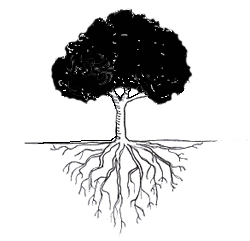
I have used this image of the tree and its roots system sinking deep into the nourishing soil to discuss finding balance in life. And it is an appropriate image to use again in our current discussion of words like should, shouldn’t, must, ought -- the kind of words that may get us to accomplish something, but in the long run are ineffective and disruptive.
Using our tree analogy, should and other such words are like artificial fertilizers applied to the surface of the soil. They cause activity in the roots, but can’t go deep enough to strengthen and balance the tree. The roots stay close to the surface, causing instability.
The ‘should’ fertilizer we keep applying in our thoughts may have the temporary effect of causing us to leaf, green up more, and be perfect specimens. “Look here! I accomplished that goal. I did what I should and I’m proud of myself and glad that’s over!”
To be effective the fertilizer has to be applied again and again. It’s an artificial construct, constantly activating us to be ‘our best.’ That ‘best’ is determined by the internalized gardener (the set of ‘should’ messages we have internalized from external sources) who has certain preferences, like having us at the perfect peak of bloom, never dormant.
This goes against nature, the cyclical quality of life itself. When we force bloom ourselves through the repeated application of this ‘should’ fertilizer, we get stressed and out of touch with our own natural rhythms.
So where did this internalized gardener come from? We learned all the inner ‘should’ gardening techniques we use from our parents, teachers, schoolmates, friends and the culture we live in, all of whom learned the same ‘should’ talk as part of the cultural norms. As there are cultural shifts in the norms over time, the shoulds just change the formula on the fertilizer, so one generation may have a different set of ‘shoulds’ to deal with. And of course the ‘shoulds’ have variations in different parts of the world.
To continue our gardening analogy, think about how trees grow in the forest without a gardener to ‘nourish’ them. For the most part they do just fine, don’t they? And we, without all the ‘should’ fertilizer, are able to do ‘our best’ without relying on these internalized external messages constantly pushing us to do so.
If this sounds scary, it’s only because we sometimes don’t know who we are without these messages we have relied on so heavily. But this is the gift of insight practice, to explore who we are when we let go of all the ‘extra’ stuff, including the ‘should’ messages that bombard us and make it difficult to simply be.
I remember at one point in my life feeling so reliant on the should messages to get me through my day that I had no sense at all of who I was. I told a work colleague that I felt ‘totally separate from myself.’ I was lost in the shuffle of trying to live by ‘should’ messages, trying to be what I thought others expected me to be. I needed most desperately to be the best I could be in order not to disappear off the face of the earth. Or so it seemed. If this resonates in any way, please take more time for yourself NOW, not at some lovely later date when things are less demanding. It may seem like the only thing that is holding you up is the long list of ‘should’ messages, but in fact there is a powerful support system already in place if you just take the time for yourself in a quiet intentional way to notice.
This is where the real value of going on a longer retreat comes in. In a pared down setting with minimal instruction and lots of space and time to be in silence, we have an amazing opportunity to notice all the clatter. If we get caught up in fighting the clatter, we just make more clatter. But if we simply notice it, observing its ways, giving it a lot of space to show itself fully and our awareness space to hold it without getting tangled up in it, then we gain great insight. The ‘shoulds’ show up and reveal themselves as voices from the past perhaps, voices we can now recognize. We can question the veracity of their statements because we are adults now and can be more discerning. We can recognize the fear in which these ‘should’ messages are steeped. Patiently and respectfully, we can have an inner dialogue and address the fears skillfully. This is the great benefit of sustained and intensive meditation practice.
In our tree analogy, we can see that the constant shallow application of artificial fertilizer stunts the roots, keeping them close to the surface, unable to withstand a strong wind. Just so, we are unable to withstand the strong winds of causes and conditions -- loss of love, position, power, possessions, health, etc. -- if our roots are not deeply rooted in rich soil and the underlying aquifer of understanding our infinite connection to all that is.
So as part of your meditation, after you have developed a centering, focused awareness practice, allow time for insights to expose the ‘should’ patterns that rise up in your thoughts.
As we are able to notice the ‘shoulds,’ their hold on us lessens. We see how the sense of deeply-rooted connection inspires naturally arising loving-kindness and compassion so that we don’t need ‘should’ to know how to behave. If we sense our connection, we will be respectful toward ourselves, toward the earth and all life. Out of that connected respect comes a collaborative creative way of being in the world that no ‘should’ could ever force.
We will still be imperfect beings. ‘Perfect’ is a should-based concept that has no reality in nature. We will still have challenges and misunderstandings, but we will have the deep roots to keep us grounded, and that makes all the difference in the world.
Sunday, May 20, 2012
A meditation on the uselessness of ‘should’
I once said to my mother ‘I feel sad.’ She said, ‘Well, you shouldn’t.’
‘Should.’ It’s a real buzz-kill. It lops off any bud of potential exploration with an instant censor. Where did that ‘should’ leave me? Feeling not only sad but chastised, guilty for feeling the way I did, angry that she shut me down, and lost.
My mother was a wonderful, joyous woman. I adored her and have missed her every day of the decades since her death. She was a great mother in so many respects, but the term ‘emotional intelligence’ was not in common usage back then. She was operating from a level of discomfort around difficult emotions that was typical of the times. Had she been of this generation it seems unlikely she would have reacted that way. But she did, and that brief exchange has stayed with me. Perhaps it’s the pivotal ‘should’ of my life, the one that was so glaringly wrong that it stood out. So in that way she did me a great service! Thanks Mom!
Noticing the ‘shoulds’ is a challenge. Most are woven deeply into the fabric of our lives. But as we practice meditation the words we use to talk to ourselves and to others become more noticeable. When we notice a ‘should’ (or ‘must,’ ‘ought’ or similar words) this is a great clue, a key to unlock the tightly guarded doors of our habituated patterns of thought and emotion. Watch for them, welcome them, question them! Use this opportunity to consciously follow the thread of ‘should’ thinking that unravels before your awareness. See what you find. If you feel you shouldn’t, then explore that. If you judge your experience, then explore that judgment. Anchor yourself in the intention to be present with physical sensation and the intention to be compassionate with whatever you find. Then get curious!
We have relied on ‘shoulds’ all our lives to tell us how to be. If we behave according to our shoulds we often feel disconnected, inauthentic and invisible. If we don’t follow our shoulds we feel guilty, unacceptable and cast out of the tribe.
These shoulds were instilled in us by parents and other relatives, teachers and other authority figures, our peer group and the fear-based advertising and cultural messages of our social environment. Looking at the fear our parents had for us, we can see that probably not all of it was based in a desire to keep us alive and healthy. Parents may push conformity as a way of protecting us from emotional experiences. Often they pass on their own fears of being unacceptable in some way. Most of us grew up in a world of competing shoulds that had us in a quandary. Should we be ‘good’ for our parents and teachers or ‘cool’ for our friends and generation?
The answer is ‘Neither!’ A ‘should’ is an ineffective means to find our way in our lives. Caught up in the tight web of ‘should’ we struggle with angst and ambivalence.
“Should’ isn’t even effective in bringing out behavior that benefits others in our community. As we wander around trying to figure out what we should do, or railing against what it is we’ve been told we shouldn’t do, we are so externally oriented, so lost to ourselves, that no one can find us. We are too busy trying to please others, or too busy trying to prove others wrong, that we are simply not present in our own bodies, our own lives. This makes people uncomfortable around us.
Through meditation we quiet down, let the world go, and we come home to a sense of self that is in need of nothing more than this. We begin to recognize the intrinsic interconnection of being, and feel more able to let go of the fear of disappearing. All we ever wanted was to be seen, to be known, to be accepted as we are. Through meditation we come to know our fundamental okay-ness. Even with all our foibles, we are, have always been and will always be just fine -- more than fine: Loved, celebrated, recognized as the brief spark of life loving itself that each of us is. We don’t have to work so hard at it! All that striving for recognition and love is counterproductive.
When we are able to see this, then the ‘shoulds’ start standing out more starkly against the backdrop of self-acceptance. That makes it easier to explore the threads of thought or emotion to which the shoulds are attached.
This internal deeply connected compassionate exploration is skillful. As we become more aware of the externally-driven habituated patterns of our lives, we become less reactive and more responsive. The freaked-out internal voices that are yelling ‘should’ and ‘shouldn’t’ quiet down so that the wise inner voice, the one that is operating out of an infinite fearless joy of being, grounds our behavior. Without the rattle of the shoulds and shouldn’ts we are able to simply operate from a deeply loving ethical base. We are conscious, loving, listening, caring beings.
Even when we are unskillful, we can hold that unskillfulness in a way that is still respectful and loving. We can do this as well with the unskillfulness exhibited by others. So much more effective than rage!
This practice is not about wiping out the shoulds, saying, in effect, ‘There shouldn’t be shoulds.’ That kind of thinking is still operating on the surface, in the ever-dueling duality. Instead we sink deeper into an awareness of the oneness of being. We come to understand that although we are transforming always, that transformation is more about expanding our sense of spaciousness, our sense of the infinite web of being, so that whatever arises, even the shoulds and shouldn’ts, can be held -- not evicted or expunged.
Historically, we have always struggled with the shoulds and shouldn’ts, and the resulting struggle and discomfort has been dealt with in a variety of ways. In Catholicism this is addressed with the confession booth. After confession, there is a sense of a fresh slate, the opportunity to adhere more carefully to the shoulds, and the humility to know that there will be more to confess the following Saturday.
Without a confession booth, some may try to cleanse their violation of all the ‘shoulds’ they carry within them through rituals such as excessive bathing or showering. I had a friend in high school who took seven showers a day. He later committed suicide. There was clearly some powerful inner struggle going on, some sense of violation that even seven showers a day could not cleanse. May he rest in peace.
More often we try to forget our violations by indulging in addictive behavior that numbs our minds. But, depending on the severity of the consequences of our addiction, being numb leaves us lost and feeling worse about ourselves than ever. It muffles the 'shoulds' but they are still there, still powerful.
Even when we are able to acknowledge that this life is a precious finite gift we are meant to treasure, we can turn this message into another should. We SHOULD feel grateful. We shouldn’t waste a minute of this gift. Maybe we are walking on the beach, enjoying the waves, the shore birds and the warmth of the sun. Then we say to ourselves, "I should do this more often," and we are back in the ‘should’ mind, back in the turmoil. This is the human condition. We are not likely to escape it completely in this lifetime, and thinking that we should is just another mental struggle.
But it is possible and skillful to notice, to be curious, to access loving-kindness and to allow it to rise up as our way of being in the world, in our interior world as well as in our interactions.
We set the intention to be conscious, present and grounded in our body. We set the intention to be compassionate, sensing in to our connection to all that is, however we name it.
These paired intentions, if maintained, effectively inspire the kind of behavior that all the ‘shoulds’ in the world could not. The regular practice of meditation, based in these intentions, unravel the tight knots of negative emotions that we have been trying ineffectively to escape. We find our hearts open and our fears are calmed. We see the truth of life’s impermanence as well as the infinite quality of being. We see that we do not need to defend this separate self but can celebrate this gift of being through joyful interaction with others. Generosity and gratitude arise naturally as the tight tangle of should-based thoughts and emotions softens and becomes more spacious.
Okay, now you’re thinking ‘I really should meditate more.’ If that’s what comes up, notice it, explore it. Should you meditate more or do you want to meditate more? Does shifting the wording change the resistance that’s kept you from meditating more? This should you’ve uncovered is the key, the door, the way in. Take it!
Let your ‘shoulds’ show. We don’t need to evict them. Doing so just sets up the battle of the shoulds. Instead we want to be aware of them and know them for the ineffective internalized voices of unskillful others that they are. Let them talk, listen respectfully, and ask questions, follow the long threads to reveal whose voice they speak with. It could even be a reunion, a treasure hunt through the old family photo album or our mother’s button box, with all those memories. We can explore through art, through writing, through dance. We are not banishing anything, just becoming aware of everything. We are healing ‘should’ blindness!
Through meditation we create the spaciousness to hold all of our experience in an open loving embrace. In this way we can savor this fleeting gift of life.
‘Should.’ It’s a real buzz-kill. It lops off any bud of potential exploration with an instant censor. Where did that ‘should’ leave me? Feeling not only sad but chastised, guilty for feeling the way I did, angry that she shut me down, and lost.
My mother was a wonderful, joyous woman. I adored her and have missed her every day of the decades since her death. She was a great mother in so many respects, but the term ‘emotional intelligence’ was not in common usage back then. She was operating from a level of discomfort around difficult emotions that was typical of the times. Had she been of this generation it seems unlikely she would have reacted that way. But she did, and that brief exchange has stayed with me. Perhaps it’s the pivotal ‘should’ of my life, the one that was so glaringly wrong that it stood out. So in that way she did me a great service! Thanks Mom!
Noticing the ‘shoulds’ is a challenge. Most are woven deeply into the fabric of our lives. But as we practice meditation the words we use to talk to ourselves and to others become more noticeable. When we notice a ‘should’ (or ‘must,’ ‘ought’ or similar words) this is a great clue, a key to unlock the tightly guarded doors of our habituated patterns of thought and emotion. Watch for them, welcome them, question them! Use this opportunity to consciously follow the thread of ‘should’ thinking that unravels before your awareness. See what you find. If you feel you shouldn’t, then explore that. If you judge your experience, then explore that judgment. Anchor yourself in the intention to be present with physical sensation and the intention to be compassionate with whatever you find. Then get curious!
We have relied on ‘shoulds’ all our lives to tell us how to be. If we behave according to our shoulds we often feel disconnected, inauthentic and invisible. If we don’t follow our shoulds we feel guilty, unacceptable and cast out of the tribe.
These shoulds were instilled in us by parents and other relatives, teachers and other authority figures, our peer group and the fear-based advertising and cultural messages of our social environment. Looking at the fear our parents had for us, we can see that probably not all of it was based in a desire to keep us alive and healthy. Parents may push conformity as a way of protecting us from emotional experiences. Often they pass on their own fears of being unacceptable in some way. Most of us grew up in a world of competing shoulds that had us in a quandary. Should we be ‘good’ for our parents and teachers or ‘cool’ for our friends and generation?
The answer is ‘Neither!’ A ‘should’ is an ineffective means to find our way in our lives. Caught up in the tight web of ‘should’ we struggle with angst and ambivalence.
“Should’ isn’t even effective in bringing out behavior that benefits others in our community. As we wander around trying to figure out what we should do, or railing against what it is we’ve been told we shouldn’t do, we are so externally oriented, so lost to ourselves, that no one can find us. We are too busy trying to please others, or too busy trying to prove others wrong, that we are simply not present in our own bodies, our own lives. This makes people uncomfortable around us.
Through meditation we quiet down, let the world go, and we come home to a sense of self that is in need of nothing more than this. We begin to recognize the intrinsic interconnection of being, and feel more able to let go of the fear of disappearing. All we ever wanted was to be seen, to be known, to be accepted as we are. Through meditation we come to know our fundamental okay-ness. Even with all our foibles, we are, have always been and will always be just fine -- more than fine: Loved, celebrated, recognized as the brief spark of life loving itself that each of us is. We don’t have to work so hard at it! All that striving for recognition and love is counterproductive.
When we are able to see this, then the ‘shoulds’ start standing out more starkly against the backdrop of self-acceptance. That makes it easier to explore the threads of thought or emotion to which the shoulds are attached.
This internal deeply connected compassionate exploration is skillful. As we become more aware of the externally-driven habituated patterns of our lives, we become less reactive and more responsive. The freaked-out internal voices that are yelling ‘should’ and ‘shouldn’t’ quiet down so that the wise inner voice, the one that is operating out of an infinite fearless joy of being, grounds our behavior. Without the rattle of the shoulds and shouldn’ts we are able to simply operate from a deeply loving ethical base. We are conscious, loving, listening, caring beings.
Even when we are unskillful, we can hold that unskillfulness in a way that is still respectful and loving. We can do this as well with the unskillfulness exhibited by others. So much more effective than rage!
This practice is not about wiping out the shoulds, saying, in effect, ‘There shouldn’t be shoulds.’ That kind of thinking is still operating on the surface, in the ever-dueling duality. Instead we sink deeper into an awareness of the oneness of being. We come to understand that although we are transforming always, that transformation is more about expanding our sense of spaciousness, our sense of the infinite web of being, so that whatever arises, even the shoulds and shouldn’ts, can be held -- not evicted or expunged.
Historically, we have always struggled with the shoulds and shouldn’ts, and the resulting struggle and discomfort has been dealt with in a variety of ways. In Catholicism this is addressed with the confession booth. After confession, there is a sense of a fresh slate, the opportunity to adhere more carefully to the shoulds, and the humility to know that there will be more to confess the following Saturday.
Without a confession booth, some may try to cleanse their violation of all the ‘shoulds’ they carry within them through rituals such as excessive bathing or showering. I had a friend in high school who took seven showers a day. He later committed suicide. There was clearly some powerful inner struggle going on, some sense of violation that even seven showers a day could not cleanse. May he rest in peace.
More often we try to forget our violations by indulging in addictive behavior that numbs our minds. But, depending on the severity of the consequences of our addiction, being numb leaves us lost and feeling worse about ourselves than ever. It muffles the 'shoulds' but they are still there, still powerful.
Even when we are able to acknowledge that this life is a precious finite gift we are meant to treasure, we can turn this message into another should. We SHOULD feel grateful. We shouldn’t waste a minute of this gift. Maybe we are walking on the beach, enjoying the waves, the shore birds and the warmth of the sun. Then we say to ourselves, "I should do this more often," and we are back in the ‘should’ mind, back in the turmoil. This is the human condition. We are not likely to escape it completely in this lifetime, and thinking that we should is just another mental struggle.
But it is possible and skillful to notice, to be curious, to access loving-kindness and to allow it to rise up as our way of being in the world, in our interior world as well as in our interactions.
We set the intention to be conscious, present and grounded in our body. We set the intention to be compassionate, sensing in to our connection to all that is, however we name it.
These paired intentions, if maintained, effectively inspire the kind of behavior that all the ‘shoulds’ in the world could not. The regular practice of meditation, based in these intentions, unravel the tight knots of negative emotions that we have been trying ineffectively to escape. We find our hearts open and our fears are calmed. We see the truth of life’s impermanence as well as the infinite quality of being. We see that we do not need to defend this separate self but can celebrate this gift of being through joyful interaction with others. Generosity and gratitude arise naturally as the tight tangle of should-based thoughts and emotions softens and becomes more spacious.
Okay, now you’re thinking ‘I really should meditate more.’ If that’s what comes up, notice it, explore it. Should you meditate more or do you want to meditate more? Does shifting the wording change the resistance that’s kept you from meditating more? This should you’ve uncovered is the key, the door, the way in. Take it!
Let your ‘shoulds’ show. We don’t need to evict them. Doing so just sets up the battle of the shoulds. Instead we want to be aware of them and know them for the ineffective internalized voices of unskillful others that they are. Let them talk, listen respectfully, and ask questions, follow the long threads to reveal whose voice they speak with. It could even be a reunion, a treasure hunt through the old family photo album or our mother’s button box, with all those memories. We can explore through art, through writing, through dance. We are not banishing anything, just becoming aware of everything. We are healing ‘should’ blindness!
Through meditation we create the spaciousness to hold all of our experience in an open loving embrace. In this way we can savor this fleeting gift of life.
Subscribe to:
Posts (Atom)