Tuesday, May 29, 2012

Shallow Rooted 'Should' - our exploration continues


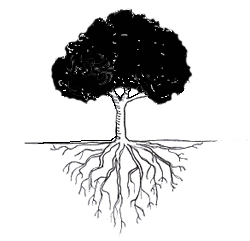
I have used this image of the tree and its roots system sinking deep into the nourishing soil to discuss finding balance in life. And it is an appropriate image to use again in our current discussion of words like should, shouldn’t, must, ought -- the kind of words that may get us to accomplish something, but in the long run are ineffective and disruptive.

Using our tree analogy, should and other such words are like artificial fertilizers applied to the surface of the soil. They cause activity in the roots, but can’t go deep enough to strengthen and balance the tree. The roots stay close to the surface, causing instability.

The ‘should’ fertilizer we keep applying in our thoughts may have the temporary effect of causing us to leaf, green up more, and be perfect specimens. “Look here! I accomplished that goal. I did what I should and I’m proud of myself and glad that’s over!”

To be effective the fertilizer has to be applied again and again. It’s an artificial construct, constantly activating us to be ‘our best.’  That ‘best’ is determined by the internalized gardener (the set of ‘should’ messages we have internalized from external sources) who has certain preferences, like having us at the perfect peak of bloom, never dormant.

This goes against nature, the cyclical quality of life itself. When we force bloom ourselves through the repeated application of this ‘should’ fertilizer, we get stressed and out of touch with our own natural rhythms.

So where did this internalized gardener come from? We learned all the inner ‘should’ gardening techniques we use from our parents, teachers, schoolmates, friends and the culture we live in, all of whom learned the same ‘should’ talk as part of the cultural norms. As there are cultural shifts in the norms over time, the shoulds just change the formula on the fertilizer, so one generation may have a different set of ‘shoulds’ to deal with. And of course the ‘shoulds’ have variations in different parts of the world.

To continue our gardening analogy, think about how trees grow in the forest without a gardener to ‘nourish’ them. For the most part they do just fine, don’t they? And we, without all the ‘should’ fertilizer, are able to do ‘our best’ without relying on these internalized external messages constantly pushing us to do so.

If this sounds scary, it’s only because we sometimes don’t know who we are without these messages we have relied on so heavily. But this is the gift of insight practice, to explore who we are when we let go of all the ‘extra’ stuff, including the ‘should’ messages that bombard us and make it difficult to simply be.

I remember at one point in my life feeling so reliant on the should messages to get me through my day that I had no sense at all of who I was. I told a work colleague that I felt ‘totally separate from myself.’ I was lost in the shuffle of trying to live by ‘should’ messages, trying to be what I thought others expected me to be. I needed most desperately to be the best I could be in order not to disappear off the face of the earth. Or so it seemed. If this resonates in any way, please take more time for yourself NOW, not at some lovely later date when things are less demanding. It may seem like the only thing that is holding you up is the long list of ‘should’ messages, but in fact there is a powerful support system already in place if you just take the time for yourself in a quiet intentional way to notice.

This is where the real value of going on a longer retreat comes in. In a pared down setting with minimal instruction and lots of space and time to be in silence, we have an amazing opportunity to notice all the clatter. If we get caught up in fighting the clatter, we just make more clatter. But if we simply notice it, observing its ways, giving it a lot of space to show itself fully and our awareness space to hold it without getting tangled up in it, then we gain great insight. The ‘shoulds’ show up and reveal themselves as voices from the past perhaps, voices we can now recognize. We can question the veracity of their statements because we are adults now and can be more discerning. We can recognize the fear in which these ‘should’ messages are steeped. Patiently and respectfully, we can have an inner dialogue and address the fears skillfully. This is the great benefit of sustained and intensive meditation practice.

In our tree analogy, we can see that the constant shallow application of artificial fertilizer stunts the roots, keeping them close to the surface, unable to withstand a strong wind. Just so, we are unable to withstand the strong winds of causes and conditions -- loss of love, position, power, possessions, health, etc. -- if our roots are not deeply rooted in rich soil and the underlying aquifer of  understanding our infinite connection to all that is.

So as part of your meditation, after you have developed a centering, focused awareness practice, allow time for insights to expose the ‘should’ patterns that rise up in your thoughts.

As we are able to notice the ‘shoulds,’ their hold on us lessens. We see how the sense of deeply-rooted connection inspires naturally arising loving-kindness and compassion so that we don’t need ‘should’ to know how to behave. If we sense our connection, we will be respectful toward ourselves, toward the earth and all life. Out of that connected respect comes a collaborative creative way of being in the world that no ‘should’ could ever force.

We will still be imperfect beings. ‘Perfect’ is a should-based concept that has no reality in nature. We will still have challenges and misunderstandings, but we will have the deep roots to keep us grounded, and that makes all the difference in the world.

Sunday, May 20, 2012

A meditation on the uselessness of ‘should’

I once said to my mother ‘I feel sad.’ She said, ‘Well, you shouldn’t.’

‘Should.’ It’s a real buzz-kill. It lops off any bud of potential exploration with an instant censor. Where did that ‘should’ leave me? Feeling not only sad but chastised, guilty for feeling the way I did, angry that she shut me down, and lost.

My mother was a wonderful, joyous woman. I adored her and have missed her every day of the decades since her death. She was a great mother in so many respects, but the term ‘emotional intelligence’ was not in common usage back then. She was operating from a level of discomfort around difficult emotions that was typical of the times. Had she been of this generation it seems unlikely she would have reacted that way. But she did, and that brief exchange has stayed with me. Perhaps it’s the pivotal ‘should’ of my life, the one that was so glaringly wrong that it stood out. So in that way she did me a great service! Thanks Mom!

Noticing the ‘shoulds’ is a challenge. Most are woven deeply into the fabric of our lives. But as we practice meditation the words we use to talk to ourselves and to others become more noticeable. When we notice a ‘should’ (or ‘must,’ ‘ought’ or similar words) this is a great clue, a key to unlock the tightly guarded doors of our habituated patterns of thought and emotion. Watch for them, welcome them, question them! Use this opportunity to consciously follow the thread of ‘should’ thinking that unravels before your awareness. See what you find. If you feel you shouldn’t, then explore that. If you judge your experience, then explore that judgment. Anchor yourself in the intention to be present with physical sensation and the intention to be compassionate with whatever you find. Then get curious!

We have relied on ‘shoulds’ all our lives to tell us how to be. If we behave according to our shoulds we often feel disconnected, inauthentic and invisible. If we don’t follow our shoulds we feel guilty, unacceptable and cast out of the tribe.

These shoulds were instilled in us by parents and other relatives, teachers and other authority figures, our peer group and the fear-based advertising and cultural messages of our social environment. Looking at the fear our parents had for us, we can see that probably not all of it was based in a desire to keep us alive and healthy. Parents may push conformity as a way of protecting us from emotional experiences. Often they pass on their own fears of being unacceptable in some way. Most of us grew up in a world of competing shoulds that had us in a quandary. Should we be ‘good’ for our parents and teachers or ‘cool’ for our friends and generation?

The answer is ‘Neither!’ A ‘should’ is an ineffective means to find our way in our lives.  Caught up in the tight web of ‘should’ we struggle with angst and ambivalence.

“Should’ isn’t even effective in bringing out behavior that benefits others in our community. As we wander around trying to figure out what we should do, or railing against what it is we’ve been told we shouldn’t do, we are so externally oriented, so lost to ourselves, that no one can find us. We are too busy trying to please others, or too busy trying to prove others wrong, that we are simply not present in our own bodies, our own lives. This makes people uncomfortable around us.

Through meditation we quiet down, let the world go, and we come home to a sense of self that is in need of nothing more than this. We begin to recognize the intrinsic interconnection of being, and feel more able to let go of the fear of disappearing. All we ever wanted was to be seen, to be known, to be accepted as we are. Through meditation we come to know our fundamental okay-ness. Even with all our foibles, we are, have always been and will always be just fine -- more than fine: Loved, celebrated, recognized as the brief spark of life loving itself that each of us is. We don’t have to work so hard at it! All that striving for recognition and love is counterproductive.

When we are able to see this, then the ‘shoulds’ start standing out more starkly against the backdrop of self-acceptance. That makes it easier to explore the threads of thought or emotion to which the shoulds are attached.

This internal deeply connected compassionate exploration is skillful. As we become more aware of the externally-driven habituated patterns of our lives, we become less reactive and more responsive. The freaked-out internal voices that are yelling ‘should’ and ‘shouldn’t’ quiet down so that the wise inner voice, the one that is operating out of an infinite fearless joy of being, grounds our behavior. Without the rattle of the shoulds and shouldn’ts we are able to simply operate from a deeply loving ethical base. We are conscious, loving, listening, caring beings.

Even when we are unskillful, we can hold that unskillfulness in a way that is still respectful and loving. We can do this as well with the unskillfulness exhibited by others. So much more effective than rage!

This practice is not about wiping out the shoulds, saying, in effect, ‘There shouldn’t be shoulds.’ That kind of thinking is still operating on the surface, in the ever-dueling duality. Instead we sink deeper into an awareness of the oneness of being. We come to understand that although we are transforming always, that transformation is more about expanding our sense of spaciousness, our sense of the infinite web of being, so that whatever arises, even the shoulds and shouldn’ts, can be held -- not evicted or expunged.


Historically, we have always struggled with the shoulds and shouldn’ts, and the resulting struggle and discomfort has been dealt with in a variety of ways. In Catholicism this is addressed with the confession booth. After confession, there is a sense of a fresh slate, the opportunity to adhere more carefully to the shoulds, and the humility to know that there will be more to confess the following Saturday.

Without a confession booth, some may try to cleanse their violation of all the ‘shoulds’ they carry within them through rituals such as excessive bathing or showering. I had a friend in high school who took seven showers a day. He later committed suicide. There was clearly some powerful inner struggle going on, some sense of violation that even seven showers a day could not cleanse. May he rest in peace.

More often we try to forget our violations by indulging in addictive behavior that numbs our minds. But, depending on the severity of the consequences of our addiction, being numb leaves us lost and feeling worse about ourselves than ever. It muffles the 'shoulds' but they are still there, still powerful.

Even when we are able to acknowledge that this life is a precious finite gift we are meant to treasure, we can turn this message into another should. We SHOULD feel grateful. We shouldn’t waste a minute of this gift. Maybe we are walking on the beach, enjoying the waves, the shore birds and the warmth of the sun. Then we say to ourselves, "I should do this more often," and we are back in the ‘should’ mind, back in the turmoil. This is the human condition. We are not likely to escape it completely in this lifetime, and thinking that we should is just another mental struggle.

But it is possible and skillful to notice, to be curious, to access loving-kindness and to allow it to rise up as our way of being in the world, in our interior world as well as in our interactions. 


We set the intention to be conscious, present and grounded in our body. We set the intention to be compassionate, sensing in to our connection to all that is, however we name it.

These paired intentions, if maintained, effectively inspire the kind of behavior that all the ‘shoulds’ in the world could not. The regular practice of meditation, based in these intentions, unravel the tight knots of negative emotions that we have been trying ineffectively to escape. We find our hearts open and our fears are calmed. We see the truth of life’s impermanence as well as the infinite quality of being. We see that we do not need to defend this separate self but can celebrate this gift of being through joyful interaction with others. Generosity and gratitude arise naturally as the tight tangle of should-based thoughts and emotions softens and becomes more spacious.

Okay, now you’re thinking ‘I really should meditate more.’ If that’s what comes up, notice it, explore it. Should you meditate more or do you want to meditate more? Does shifting the wording change the resistance that’s kept you from meditating more? This should you’ve uncovered is the key, the door, the way in. Take it!

Let your ‘shoulds’ show. We don’t need to evict them. Doing so just sets up the battle of the shoulds. Instead we want to be aware of them and know them for the ineffective internalized voices of unskillful others that they are. Let them talk, listen respectfully, and ask questions, follow the long threads to reveal whose voice they speak with. It could even be a reunion, a treasure hunt through the old family photo album or our mother’s button box, with all those memories. We can explore through art, through writing, through dance. We are not banishing anything, just becoming aware of everything. We are healing ‘should’ blindness!

Through meditation we create the spaciousness to hold all of our experience in an open loving embrace. In this way we can savor this fleeting gift of life.

Sunday, April 29, 2012

‘You Don’t Have to Be Good’

“You don’t have to be good.’ This is the first line from Mary Oliver’s poem Wild Geese. It is such a touchstone for so many of us who find we are always working so hard to be good. We may be surprised to find these words are such a release for us, such permission -- not to run out and be bad, but to stop striving so hard to be good.

We talked a little about striving last week when we discussed the
bodhisattva. It is so easy to get stringent and determined around recreating ourselves in the mold of a bodhisattva or any other form -- a good Buddhist, a good person, a worthy person. Or perhaps we don’t care about good, but strive to be admired for beauty, talent or brilliance.

But the striving itself keeps us from ever finding joy in any accomplishment. Instead it causes us to strengthen and tighten the pattern of striving. We can’t appreciate the achievement because we are stuck in looking forward to the next goal. That is the pattern we create with our striving. We are attached to the tight tangle of trying hard and are blinded to who we truly are. So when we think about letting go, it seems threatening to who we believe ourselves to be.

We may be proud of the very things that ultimately cause us and those around us misery. We are usually conditioned to be proud of will power. We have seen how well it works to achieve things. Culturally we embrace will power as one of the highest virtues. And we see it as trying really hard, putting blinders on to any distractions and pushing through. There may be times where life depends on such determination. But it is a sprint mentality, not sustenance to feed us for the whole journey of life.

Imagine if will power were music. It would sound forced, strident and sharp. Playing that tune would be all about conquering the notes, racing to the finish. It would care nothing about savoring the rhythm, melody or harmony of the music itself.

We have explored in the past the concept of Right or Wise Effort. Wise Effort is one of the eight aspects of the Noble Eightfold Path to enlightenment.There are certain qualities of Wise Effort that are missing when we get caught up in striving, pushing through with will power. Wise Effort is first about being present, anchored in sensation, noticing what is true in this moment. It stems from the awareness that arises, an awareness that is compassionate and insightful, seeing the world fresh in every moment.

When we recognize we are not using Wise Effort, we simply refocus our intention. In class, when we begin meditating, I offer up the prompt to set the paired intentions of being present and being compassionate. We don’t need to get caught up in judging our failure to have Wise Effort. We just come back to it again and again.

Wise effort, anchored in these two intentions, rises up from the truth of the present moment -- what’s going on in our body, our mind, our heart; what’s going on around us -- all the causes and conditions that whirl about us at any given moment that may infuse our thoughts and emotions. With compassion we temper our effort to accomplish something. If we are focused on a goal to get something done, we might not be present to do what needs doing in the fullest and most authentic way possible.

Authenticity is a naturally arising expression of being fully present in the moment and being compassionate with ourselves and others. Wise Effort is attuning our actions to the natural rhythm of this authentic expression. Striving feels quite inauthentic because it comes from some external focus, a desire to be seen in a certain way by those around us.

The opposite of striving -- giving up, not bothering, daydreaming -- comes from a sense of powerlessness. The only place of power is in the present moment. The past and future are just ideas we have in our thoughts in the form of memories, regrets, hopes, plans or worries. If we get stuck in these in past or future thought patterns, unable to be fully present in the here and now of life, we lose touch with our own access to infinite power. Only in this moment right here and now can we, with compassion, transform a sour situation into something vital, lively and joyful -- whether in the world or within ourselves. This is Wise Effort.

Exercise:
After meditation, take a moment to look at the current situations of your life and notice where you are perhaps living in the future, hopeful and striving, or fearful and losing ground.

Perhaps what comes up is an area in your life that seems particularly dysfunctional -- an inability to get a handle on something. These are the areas where we go dead, where we fall out of awareness of the moment, even if we are practiced meditators who are usually able to be fully in the moment much of the time.

Is there some area where you go dead, where you get caught up in the future or the past?

For me it is around eating, especially around sweets. I can at times get caught up in a tight little pattern of circling back to the kitchen for one more of whatever treat is in the cupboard or fridge. It’s a circular journey where I get lost, even though, or maybe exactly because, I’ve done it so many times. If there is something sweet in the house, my mind can not leave it alone. I cannot rest until it is gone. Wouldn’t it be great to have the ability to pace myself, to have a little bit today, and, if I feel like it, a little bit tomorrow? I purchase or bake a treat with that very idea in mind. And then something else kicks in. There have been times in my life where I have been able to muster up the will power to steer clear of sweets all together. At these times I am very proud of myself, redefine myself as a person with a strong will, an admirable person. But that pride, pleasant as it seems, is in the end just an extra load, an extra label, and it doesn’t get to the core of the problem.

It’s rare to find a person who doesn’t have some place where they go mindless and get caught up in tight patterns. Going mindless so that we do something self-destructive and then beating ourselves up about it is a pretty toxic combination. It is the exact opposite of our paired intentions to be present and compassionate. We see the results of this mindlessness and lack of compassion all around us in the world, where people are living out tight patterns of destructive behavior, bringing misery to themselves, to those around them, to society as a whole, and to the earth.

Mindfulness meditation is a training to help us be fully present in all areas of our lives. Wise Effort encourages us to set the intention to be present, even in difficult moments so that we can see what’s going on, what sparks the mindless pattern, the words we use to make it okay, the way we might scold ourselves afterwards, perhaps the way we take it out on others, etc.

With Wise Effort, I can notice the actual sensations of my desire rather than act upon the cues I am conditioned to believe must be followed. With Wise Effort I can do this. But because of the life-long pattern of either riding the steam roller of will power or wallowing in the swamp of lethargy, finding that authentic expression of Wise Effort in this area is more challenging.

With meditation practice we are developing the ability to be conscious. We can sit with our thoughts and notice the things we tell ourselves, seeing them as threads of thoughts passing through our awareness. Since they do not define us, we can notice them without the reactivity of harsh judgment or despair. We can pay particular attention to when we find we are justifying a choice. For example, I have several sentences that repeat on a regular basis, the latest ones I’ve noticed are, ‘Grandmas should be plump,’ and ‘The fat is filling out my wrinkles and I would look older if I were thinner.’

When we find ourselves justifying our choices, that’s a clue to a challenging set of self-destructive patterns. After all, we don’t bother justifying going for a walk, eating a healthy meal or washing up.

So if you found an area in your life where Wise Effort seems to be lacking, you might want to take the time to really notice what is going on, adding spacious awareness where there is a deadening dread or a powerful drive.

Here are a few guidelines for this exercise: Try it out right after meditation or any time when you are quiet and the wise inner voice (the one that accesses our connection to all that is) can be heard. Set the intention to be present and compassionate each time you find that your mind has wandered or you are being rude to yourself.

Notice how much of what comes up is directed from outside sources, bringing up comparing mind, the inner scold and a sense of personal failure. Question the truth of everything, but do so in a respectful way.

Consider journaling as a way of noticing the way you talk to yourself and a way of making note of any insights. Let it be an interesting ongoing journey of discovery, not one more chore on your to do list.

You’ll find Wise Effort supports and sustains you in a way will power or striving never could. And remember, you don’t have to be good!

Monday, April 23, 2012

Oh, to be a Bodhisattva

(NOTE: The term Bodhisattva is from Mahayana schools of Buddhism, and I am grounded more in Theravada, the school of the elders, the one that you might say keeps the Buddha’s flame burning without additional fireworks. However, Bodhisattva has resonance for me and perhaps for you. Just hold all I am about to say lightly and then, if interested, you can explore more on your own.)

When visiting the Asian Art Museum in San Francisco we come across many images of Bodhisattva in various representations, including one with a thousand arms, called Avalokiteshvara, the bodhisattva who is said to hear the cries of the world and embody the compassion of the buddhas.
 
What comes up for you when you envision this thousand armed reliever of worldly pain?

I remember thinking the bodhisattva must be something like the ultimate multi-tasker, having a hand in every pot and everybody else's business. Exhausting to consider! So it helped me to hear the interpretation that each of us, when we do something with true compassion, is an arm of the bodhisattva reaching out into the world.


When we come to the term anew and learn that a person who chooses to be a bodhisattva sacrifices their own entry into nirvana until all beings can enter as well, we might imagine a superhero or a supernatural being -- certainly not something we could become. But at some point in our practice, we can revisit the idea of bodhisattva with a more spacious perspective.
In his book The Wisdom of Imperfection, British psychologist and Tibetan Buddhist meditation teacher Rob Preece writes, “A Bodhisattva chooses to live within this paradox of knowing deeply the illusory nature of the world he or she inhabits while still being willing to remain within it.”
Choosing to live within the paradox --- that’s what we do as Buddhist practitioners when we stop chasing bliss and choose to stay present fully with whatever arises.


The paradox we live with is that, on the one hand: This moment matters. We matter. Those around us matter. Our actions matter. Our words matter. How we make our livelihood matters. How we care for the earth matters. It all matters.


AND YET! Held with grace and a sense of equilibrium, we and all that we care about, do and feel is, in the grand scheme of things, gone in the blink of an eye. We can go further to say that all of this matter that seems to matter so much is most likely illusory. But if we’re not ready to recognize that, it’s enough for us, in moments when the mattering weighs heavily upon us, to remind ourselves that: Life is fleeting. We all die, some sooner some later, but death comes without exception. We are each of us only one of seven billion people in the world and it is not all up to us to solve all the problems on the planet. Our amazing beautiful earth is but a speck of dust in the vastness of space.
This is just putting things into practical perspective! 


When we can hold deeply and lightly these two seemingly opposite truths -- that it all matters/that none of it matters -- in a balanced way -- not teetering, not juggling, but opening our embrace to include it all, then we are skillfully living with the paradox. 


The ability to hold this paradox in a spacious balanced way makes life rich and meaningful, gives each moment luminosity. Perhaps we came to the practice of meditation to escape from the world that seems to be an impossibly challenging source of bottomless suffering. But with the practice of being present, we find that what gives joy and meaning to our lives is not escape, but the ability to bring a heightened awareness into this moment, to be fully engaged and caring. What we learn by being present is the existence of this wondrous paradox, that through the development of spacious, present, compassionate mind, we can be whole-heartedly engaged in the world without losing the awareness of its temporal nature.


Living with the paradox: This is our practice. We can use this sense of paradox to live joyfully, or we can misuse it, as we all do from time to time. For example: We take the sweetest moment and are sad that it will not last. In a difficult moment we try to escape to a bliss state. At times perhaps we even feel put upon to be here. “I didn’t ask to be born.” At times we may feel that nothing we do matters, so why bother?


Recognizing any tendency we may have to ‘lose heart’ in this way is part of the gift of the practice. Through quieting down in meditation, we begin to hear the ways we talk to ourselves, the stories we tell, the myths we live by, the habitual patterns of thought and emotion that course through us. Through awareness we can begin to question these thoughts. Is this true? How do I know this is true?


With full attention, we can also find within us a spark of infinite loving kindness, metta, and we can use this spark to kindle compassion for ourselves and others.


When we feel a connection with all that is, we lose the fear of disappearing. How can we disappear if our being-ness is saturated into the fabric of life? We lose the need to feel solid and unique in order to exist. We can rest in the awareness that nothing is as solid as we believed it to be. The physical world becomes diaphanous, like the sheer veils of a dancer: intoxicating, delightful but ultimately of no substance. (Science tells us this as well, but our minds connect the dots and see substance in the objects around us where in fact, at the cellular level, there is primarily space.)


The bodhisattva is able to sustain his or her deep compassion and sense of engagement, while wearing all this earthly being-ness lightly. The bodhisattva knows the nature of bliss, but instead of crossing the threshold into eternal bliss state, chooses to dance with it and weave it skillfully in his or her interactions in the world.


So if we have experienced bliss -- that sense of the ego falling away, of our pain and suffering disappearing into an infinite sense of joy, gratitude and acceptance -- and yet we choose to live in this world fully, offering a lightness of being into all our interactions, then perhaps we are already bodhisattvas. We can let go of awed admiration for some other being’s self-sacrifice, the comparing mind and the sense of personal failure. 


The bodhisattva is a being of joy! The attributes of a bodhisattva naturally arise out of ongoing dedication to a joyful practice. These attributes are known as the Six Paramitas or perfections: Morality, generosity, patience, perseverance, meditation and wisdom.


If we strive to ‘become a Bodhisattva’ we can turn these Paramitas into distant goals and beat ourselves up with the word ‘should.’ More wisely, we can use them as gentle guiding lights to expose and explore painful areas where we suffer, and let our deepening understanding and access to inner wisdom spark the bodhisattva that lives within us all.


Many of us have stood at the door to Nirvana -- perhaps a fleeting glimpse in childhood that we have since forgotten or discounted. Some of us have even stepped beyond the threshold and have recognized the eternal nature of being. All of us have the capacity to access this infinite source, if we release the fear and rest in awareness of what is true in this moment. 


Once accessed, we can choose to live inside that bliss state or, instead, allow it to live inside us, fueling us with the infinite energy of compassion. In this way we are not rejecting the gift of being alive in this world. It is no sacrifice to live from a state of full joyful appreciation whatever arises in our experience.

Saturday, April 14, 2012

Insight Meditation, how 'Dharma can heal our wounds'

The short lessons we read from The Pocket Pema Chodron before my dharma talk and discussion, is often in sync with what I had planned to talk about or whatever came up before in our meeting. This week we read #87 ‘Our Predicament is Workable,” that starts with the sentence “The dharma can heal our wounds, our very ancient wounds that come not from original sin but from a misunderstanding so old that we can no longer see it.”

‘...a misunderstanding so old that we can no longer see it.” What does that mean?

We talked about how on a personal level there are many patterns that we operate with in our lives -- patterns of thinking and behavior -- that we see as our way of being, part of who take ourselves to be. We let these patterns define us even though we don’t know where they come from or how they were woven.

On a collective cultural level, we have been weaving certain traits as well, reacting to events such as climate, landscape, famine, drought, war and other threats to our well being. These culturally inherited or co-created traits also become part of our personal pattern. International travel is useful to help us see beyond what we believe to be ‘human nature’ when it’s really just our own localized set of patterns at work. We can see other nation’s collective patterns more clearly, without needing to judge them or prove one is better than another. Viva la difference! When we see how much variation there is between cultures and between individuals within cultures, we are less inclined to believe that there is one way of seeing the world or any given situation. This frees us from having to defend the particular thought patterns we are most familiar with, nor do we need to disparage them. We can simply begin to see them as a little more free-floating, a little less intrinsic to our very being.

Through mindfulness meditation we make the space to begin seeing these patterns more clearly as they arise and act out as passing thoughts or emotions. We can compassionately look at them, and at the defensiveness, shame or judgment that may arise with them. They are just patterns. As we give our minds the quiet to settle down and become spacious, we may wonder about some of the things we notice.We can perhaps focus our thinking mind, struggle to analyze these patterns and come to some conclusions. But what is this analysis and what are these conclusions but more judgment, blame and assumption? More of the same patterns?

In the space we create through our meditation practice, we can wonder in a more open creative way. For example, we can simply put out the question, “Is this true?” and then allow for our quiet attention to let the ‘answers’ arise in our awareness.

I shared with the sangha an experience I had soon after starting to meditate 30+ years ago. I was questioning an ongoing troublesome pattern I recognized, a place in my life where I tended to go dead. I asked “Why am I like this?” Then I let the question go (probably because I had asked it more in despair than in any expectation of finding an answer!) and I relaxed, resting a little longer before getting up to go about my day.

Because I was relaxed but noticing, three different vivid images of events from my past floated one by one through my awareness. I remember thinking how odd it was that these long forgotten memories would just show up like that, yet here they were. Because they came in a series, I looked for a common thread, and realized that each one offered a memory of getting shut down around this very area of concern, making me turn inward and go dead.

‘Oh!’ The answer was there as clear as if a spotlight and a close up lens had been offered up for purposes of self-exploration and discovery. This is what creating a meditative relaxed open attention to the present moment can offer up, if we are willing to stay present to notice.

A sangha member shared her own exploration of a particular knot of fear-based pattern that troubled her. She could see that the reaction that became her pattern was learned at an early age. Like most of our patterns, she saw how it made sense at the time but now, as an adult with other means and with the power of autonomy, she could respond with more skill to challenging situations.

This is part of the insight process. We notice, we question, we gain insight. And then what? Well, if we just stop there we can either develop a pattern of judging our patterns, or we can stay open and allow awareness to soften the patterns, releasing us from them. But there is something else we can do if we are wanting to continue the process a little further within a meditative self-exploration.

If we have our younger self in mind, we can compassionately reparent the child within. What does this mean? Well, especially if we are parents or have taken care of children, it is fairly easy to see our young self with a great deal of tenderness and compassion. (Whatever harsh views we hold about ourselves, certainly we can allow that as small children, no matter how we behaved, we were worthy of being loved, being held with compassion. Even the person we were in our early twenties, before the finishing touches were put on our brain’s judgment functions scientists have now discovered, can be reparented, forgiven for failures of judgment, etc.)

Whatever it was that we didn’t receive from our parents or guardians -- love, kindness or permission to be ourselves -- we can give ourselves now. We may find within us the voice of the parent that may have withheld love, been overbearing, forgot to praise or was constantly scolding or abusing us. Whatever our relationship with those who had power over us, we can fairly say they did the best they could at the time, because that’s true for us all. We each of us hold within us a set of patterns that, if we are not able to get conscious, dictate our behavior. If there is no room for forgiveness, then let that be a known knot within us, a knot that we can hold with compassion for now.

We can recognize that the still-active voice within us that replicates the parent’s voice can also be held with tenderness. It is what we have to deal with now -- not the actual parent, but the internal parent voice. (So often we feel we need to have a conversation with our elderly parent, or feel we have lost the opportunity after they die, when really it’s this inner parent that is in charge now, and it’s an inner conversation that needs to happen!)

We can hold this inner parent voice with compassion, treat it with respect, listen to its concerns, and work with it in the same way we have worked with other voices or aspects of self, all of which are knotted fear-based patterns of thought-emotion that can be seen now that we are creating an open spaciousness within our minds.

In our meditation practice we have the paired intentions to be fully present and to be compassionate with ourselves and others. With these two intentions we have the very tools we need for skillful inner exploration and insight,

Making Note
When we have insights, it is often useful to make note of them. Caveat: This can turn into a compulsion to write down everything, which turns it into something different and sometimes short circuits the process. But if some words stay with us and make a profound difference in our lives, then writing those words down and keeping them close might be useful.

I have this note to self that I wrote on a retreat pinned to my bulletin board:

I have nothing to fear
I have nothing to hide
I have nothing to prove
I have something to give.

This was a realization I had on a retreat. At the moment I wrote it, it was not a hope of a way to be but my actual experience of being. Up on the board, glanced at on occasion, it refreshes me, strengthens me, puts me back in touch with myself.

Of course what I wrote down is not always true for me. I don’t use it as an ‘affirmation’ but a way to find the truth of the current moment. I can say those words and question. Is that true?

At a recent reading an accurate statement was:

I have nothing to fear, yet I’m afraid.
I have nothing to hide yet I feel the weight of the effort to keep something buried inside me.
I have nothing to prove yet I feel myself striving to be something other than what I am.
I have something to give, yet I withhold it for fear it is not good enough.

That was the truth in the moment I wrote that statement. To work with it at the time I asked questions:

What am I afraid of? (Always a great question whatever the situation!)
What am I hiding?
What am I trying to prove?
What do I have to give?

At any given moment the answers will arise differently, so I will not record them here. This is just a reminder, a suggestion, of how to work with an insight that has captured the crux of a knotty pattern within. We each have areas that are particularly knotty, patterns however created. When we have an insight that shines a light on the knot, that makes more space between the knotted threads, that makes it easier to see the threads from more angles so we can see where the threads come from and how the tangle got so tight, then we have the opportunity to sit with it and allow it to inform us.

Can we take the time to allow the process to unfold? Can we let it arise without forcing it, without jumping too quickly to grab an easy answer and claim it as proof of our enlightenment?

May we be relaxed but alert, open in mind and heart, awakened to the moment, filled with a sense of universal kindness, able to hold whatever arises in an open embrace.